


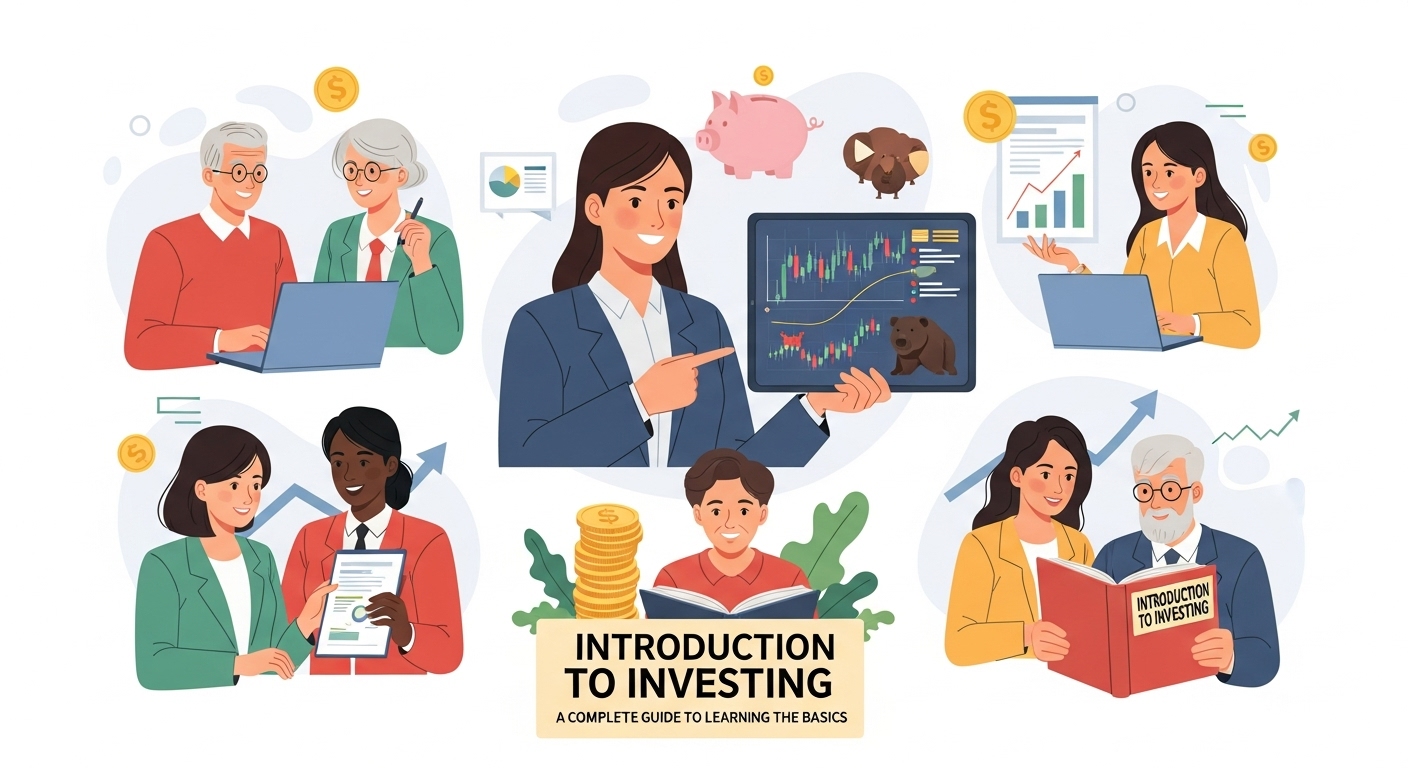
In an era of economic volatility and shifting financial landscapes, the ability to manage and grow one’s wealth is no longer a luxury—it is a fundamental survival skill. For many, the word “investment” conjures images of chaotic trading floors or complex algorithmic screens. However, at its core, investing is a remarkably simple concept: it is the act of putting your money to work today so that it can provide you with more money in the future.
Whether you are looking to build a retirement nest egg, save for a child’s education, or simply ensure your savings don’t lose value to inflation, understanding the mechanics of the market is essential. This guide serves as an exhaustive roadmap for the beginner. We will strip away the jargon and provide a deep, logical, and actionable framework to help you earn money with investment strategies that stand the test of time.
Chapter 1: The Core Philosophy – Why We Invest
The Shift from Consumer to Owner
Most people spend their lives on the “consumer” side of the economy. They pay for technology, energy, food, and housing. When you make an investment, you move to the “owner” side. You become a partial owner of the companies that produce those goods or a lender to the entities that build infrastructure. Instead of your money flowing out to corporations, their profits flow in to you.
The Silent Thief: Inflation
If you hide $10,000 under a mattress today, it will still be $10,000 in ten years. However, because of inflation—the gradual increase in the price of goods and services—that money will buy significantly less. Historically, inflation averages around 2–3% per year. To maintain your purchasing power, your money must grow at a rate that exceeds inflation. Savings accounts rarely achieve this; investments do.
The Eighth Wonder: Compounding
Compound interest is the process where the value of an investment increases because the earnings on an investment, both capital gains and interest, earn interest as time passes.
- Example: If you invest $10,000 at a 7% annual return, after one year, you have $10,700. In the second year, you earn 7% not just on your $10,000, but on the $10,700. Over 30 years, that $10,000 grows to over $76,000 without you adding another penny. This is the primary engine used to earn money with investment.
Chapter 2: Financial Foundations – Before You Begin
You cannot build a skyscraper on a swamp. Before entering the market, three criteria must be met to ensure your investment journey isn’t cut short by a personal financial crisis.
1. The High-Interest Debt Cleanse
Before investing, you must address debt—specifically “bad debt” like credit cards. If your credit card charges 20% interest and the stock market returns an average of 10%, every dollar you put into the market instead of paying off the card is a net loss of 10%. Paying off a 20% debt is the equivalent of a guaranteed 20% return.
2. The Emergency Fund
The market is volatile. If the market drops 20% and your car breaks down at the same time, you do not want to be forced to sell your investments at a loss to pay for repairs. Keep 3–6 months of living expenses in a liquid, high-yield savings account (HYSA). This “peace of mind” fund allows you to stay invested during market downturns.
3. Defining Your “Why” and “When”
Your strategy depends entirely on your goal.
- Short-term (1–3 years): Saving for a wedding or a house down payment. Use low-risk vehicles like CDs or Money Market Funds.
- Long-term (10+ years): Saving for retirement. Use growth-oriented vehicles like stocks.
Chapter 3: Asset Classes – The Ingredients of a Portfolio
To earn money with investment portfolios, you must understand the different types of assets you can own. These are categorized by their risk, return potential, and behavior.
1. Equities (Stocks)
A stock represents a share of ownership in a corporation.
- How you earn: Through capital appreciation (the stock price goes up) and dividends (the company sends you a portion of its profits).
- Risk: Higher. Prices can fluctuate wildly based on company performance or global news.
2. Fixed Income (Bonds)
A bond is a loan you make to a government or a company for a specific period.
- How you earn: The borrower pays you regular interest (coupons) and returns your original principal at the end.
- Risk: Lower than stocks, but if interest rates rise, bond prices typically fall.
3. Cash and Equivalents
These include Treasury bills, certificates of deposit (CDs), and high-yield savings accounts.
- How you earn: Simple interest.
- Risk: Practically zero (if FDIC insured), but the return often barely keeps up with inflation.
4. Real Estate
This can be physical property or Real Estate Investment Trusts (REITs), which are companies that own income-producing real estate.
- How you earn: Rental income and property value appreciation.
- Risk: Requires significant capital (for physical) and is subject to local economic shifts.
Chapter 4: Investment Vehicles – Where Your Assets Live
An investment vehicle is the “bucket” that holds your assets. The bucket determines the tax rules and when you can access your money.
1. The Brokerage Account
A standard, taxable account. You can deposit money, buy stocks/bonds, and withdraw at any time. There are no tax advantages, but there are also no “lock-up” periods.
2. Retirement Accounts (IRA and 401k)
- Traditional: You contribute “pre-tax” money (lowering your tax bill today), but you pay taxes when you take the money out in retirement.
- Roth: You contribute “after-tax” money (no tax break today), but the money grows tax-free, and you pay zero taxes when you withdraw it in retirement. For most beginners, the Roth IRA is a powerful tool to earn money with investment without the government taking a cut later.
3. Mutual Funds vs. ETFs
- Mutual Funds: A pool of money managed by a professional. They are usually traded only once a day at the end of the market close.
- ETFs (Exchange-Traded Funds): Similar to mutual funds but they trade on an exchange like a stock. They are generally more tax-efficient and have lower fees.
Chapter 5: Strategy – Diversification and Asset Allocation
The secret to long-term success isn’t picking the “perfect” stock; it’s the structure of your portfolio.
Asset Allocation: The Big Picture
Asset allocation is the percentage of your total money that goes into each asset class.
- Young/Aggressive: 90% Stocks / 10% Bonds.
- Middle-Aged/Balanced: 60% Stocks / 40% Bonds.
- Retired/Conservative: 30% Stocks / 70% Bonds.
Diversification: Don’t Bet on One Horse
If you buy only Apple stock and Apple has a bad year, you lose. If you buy an S&P 500 Index Fund, you own 500 of the largest companies in the U.S. If Apple fails, you still have Microsoft, Amazon, and 498 others. Diversification reduces risk without necessarily sacrificing return.
Chapter 6: The “How-To” of Earning Money
To effectively earn money with investment strategies, you need to understand the three ways profit is realized.
1. Dividends (The “Paycheck”)
Many established companies (like Coca-Cola or Johnson & Johnson) pay shareholders a quarterly dividend. For a beginner, the best move is to set up a DRIP (Dividend Reinvestment Plan). This automatically uses your dividends to buy more shares, accelerating the compounding process.
2. Capital Gains (The “Profit”)
If you buy an ETF at $100 and it grows to $150 over five years, you have a $50 capital gain. However, you only “earn” this money when you sell. Until then, it is an “unrealized gain.”
3. Interest (The “Rent”)
When you hold bonds or cash equivalents, you are effectively renting your money to an entity. The interest is the rent they pay you for using your capital.
Chapter 7: The Passive Revolution – Index Investing
For decades, the financial industry pushed “Active Management”—the idea that you should pay an expert to pick stocks for you. However, data from S&P Dow Jones Indices consistently shows that over 15-year periods, roughly 90% of active managers fail to beat the market index.
Why Index Funds Win
- Lower Fees: Passive index funds don’t have to pay expensive analysts, so they charge almost nothing (e.g., 0.03% vs. 1.00% for an active fund).
- Tax Efficiency: They sell stocks less often, leading to fewer taxable events.
- Broad Exposure: You own the entire market, ensuring you never miss out on the next big winner.
For a beginner, a “Three-Fund Portfolio” (Total US Stock Market, Total International Stock Market, and Total Bond Market) is often all you will ever need to build significant wealth.
Chapter 8: Understanding Risk and Volatility
Risk is often misunderstood. In the world of investment, there is a difference between volatility and permanent loss.
Volatility
The price of the stock market goes up and down every day. This is volatility. It is the “fee” you pay for the high returns the market offers. If you don’t need the money for 20 years, a 10% drop today is irrelevant.
Permanent Loss
This happens if you buy a single company that goes bankrupt, or if you panic-sell your index funds during a market crash. To avoid permanent loss:
- Never invest money you need in the next 3 years.
- Stay diversified.
- Keep your emotions in check.
Chapter 9: The Impact of Costs and Taxes
When you earn money with investment portfolios, you have two main silent partners: the investment firm and the government.
The Expense Ratio
Always check the “Expense Ratio” before buying a fund.
- A 0.1% fee means you pay $10 a year for every $10,000 invested.
- A 1.0% fee means you pay $100 a year.
Over 40 years, that 0.9% difference can result in losing hundreds of thousands of dollars to the fund manager rather than keeping it for your retirement.
Capital Gains Taxes
- Short-term: If you hold an asset for less than a year, your profit is taxed at your normal income tax rate (higher).
- Long-term: If you hold for more than a year, you are taxed at the long-term capital gains rate (0%, 15%, or 20% depending on income), which is significantly lower.
Chapter 10: Step-by-Step – How to Start Today
- Choose a Brokerage: Look for firms with $0 commissions and low-cost index funds (e.g., Vanguard, Fidelity, Schwab).
- Open an Account: For beginners, a Roth IRA is usually the best starting point due to its tax-free growth.
- Link Your Bank: Set up an automatic transfer. Even $50 a month is enough to start.
- Select a “Target Date Fund” or Total Market ETF: If you want to be hands-off, a Target Date Fund automatically adjusts your risk as you get closer to retirement.
- Automate and Ignore: The best investors are the ones who check their accounts the least. Set it to “autopilot” and let the market do the work.
Chapter 11: Common Beginner Pitfalls
- Waiting for the “Dip”: People spend years waiting for the market to crash before they invest. Usually, the market goes up so much while they are waiting that even after the crash, the prices are higher than when they first started watching. Time in the market beats timing the market.
- Checking Daily: The stock market is like a tree; if you pull it up by the roots every day to see if it’s growing, it will die. Check your portfolio quarterly or annually.
- Chasing Hype: If your neighbor is bragging about a “hot crypto coin” or a “penny stock,” the opportunity to make easy money has likely already passed. Stick to proven, broad-market assets.
Chapter 12: Advanced Introductory Concepts
As you progress, you will hear terms like Market Cap and P/E Ratio.
- Market Cap: The total value of a company. Large-caps are stable giants; small-caps are volatile growth engines.
- P/E Ratio: Price-to-Earnings. It tells you how much you are paying for every $1 of the company’s profit. A high P/E might mean a company is overvalued, or it might mean investors expect massive growth.
Conclusion: The Path to Financial Freedom
Investing is not about being “smarter” than the next person; it is about being more disciplined. The market is a tool that rewards those who provide capital to the world’s most productive enterprises. By starting today—even with a small amount—you harness the power of time and compounding.
To truly earn money with investment is a long-term commitment. It requires you to ignore the noise of the daily news, keep your costs low, and stay diversified. You don’t need to find the next Amazon to be wealthy; you simply need to own the whole market and stay out of your own way.
The journey to wealth begins with a single contribution. The best time to start was yesterday; the second-best time is now.
Summary Checklist for Beginners:
Disclaimer: This article is for informational and educational purposes only and does not constitute financial, legal, or tax advice. All investments carry risk. Consult with a professional financial advisor before making significant investment decisions.